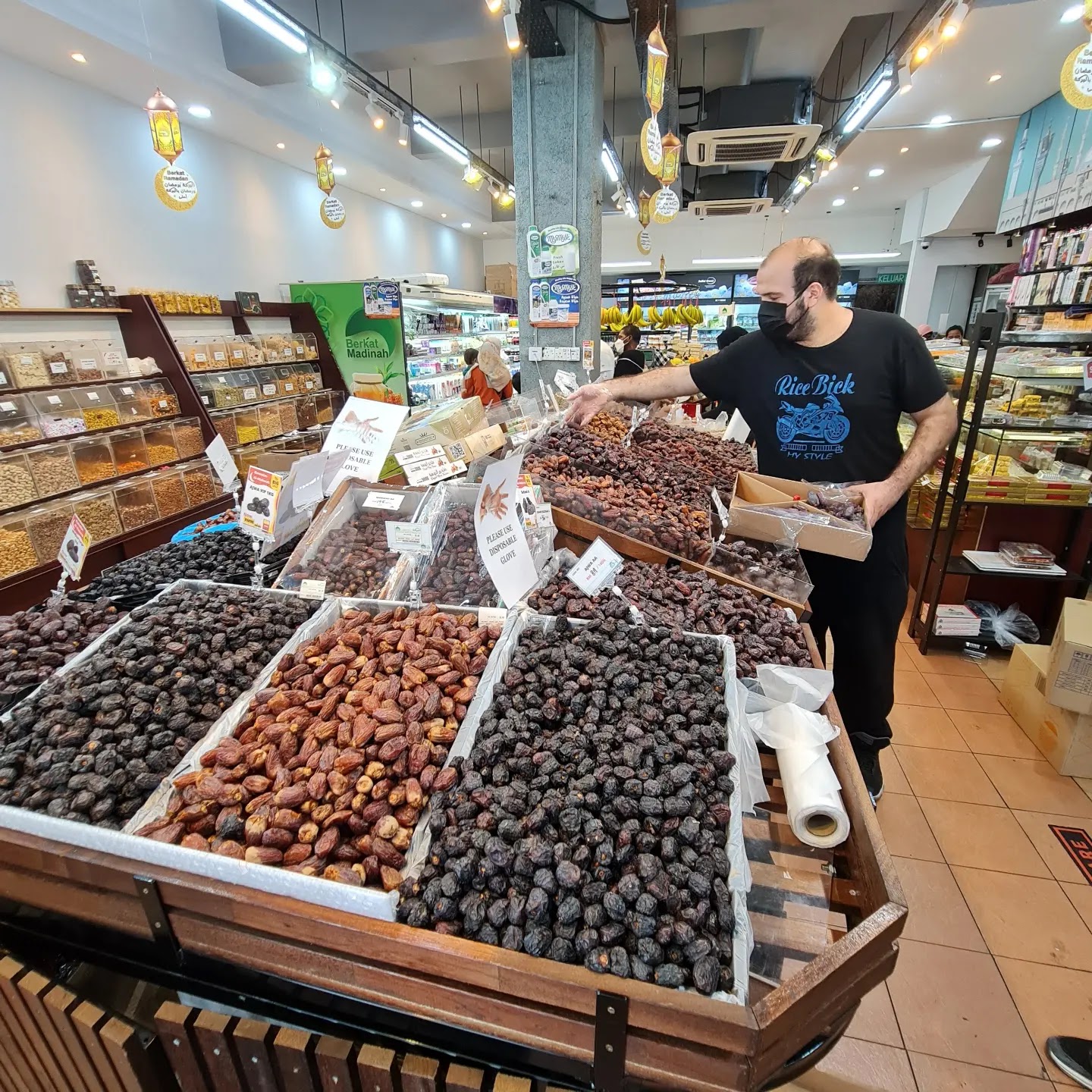
Kedai Kurma: A Haven for Date Enthusiasts
A kedai kurma is simply a date shop, and for anyone who likes dates it is the one place where many varieties sit side by side. This guide covers what to look at on the shelf, which words on the label matter, and what to ask before you pay.
Every date on the shelf is imported
Malaysia has no commercial date-growing trade, so every date in a kedai kurma has come in from abroad. Origin is the first thing worth reading on a box, because it tells you more about the fruit than the brand name does.
The varieties you are likely to meet
The names on the shelf group neatly by country. From Saudi Arabia come Ajwa, Safawi and Mabroom from the Madinah region, Sukari from Al-Qassim and Khudri as the everyday value date. From Iran come Mazafati from Bam in Kerman province, along with Mariami, Piarom and Sayer. Medjool and Deglet Noor round out the shelf.
- Ajwa is small, roundish and near-black with finely wrinkled skin, and it is soft to bite. Kurma Nabi is a market name for Ajwa.
- Safawi is longer than Ajwa, dark brown to black, soft and chewy.
- Mabroom is long and slender, reddish-brown and semi-dry.
- Sukari is golden-amber and very sweet, and is sold either soft or drier.
- Mazafati, also sold as Rotab Mazafati Bam or kurma madu, is dark and very soft.
- Mariami and Piarom are two separate Iranian varieties, both dark and semi-dry.
- Sayer, also traded as Stamaran, is amber-brown and semi-dry.
- Medjool is large and very soft with a rich caramel taste.
- Deglet Noor is golden, translucent and semi-dry, and comes from Tunisia and Algeria.
Rutab and tamr on the label
Rutab (or rotab) means the soft, fresh-ripe stage of the fruit. Tamr (or tamar) means fully ripe and drier. Sukari is one variety sold at both stages, so a soft Sukari and a drier Sukari will eat very differently even though the name on the box is the same.
Grades are each seller’s own
Labels such as A, AA, AAA and Jumbo look official, but there is no international standard behind them. Each importer sorts by size in its own way, so a gred AAA from one supplier may not match AAA from another. Compare grades within one shop rather than across shops. If you want help reading the numbers on a price board, our guide on how to read a kurma price list walks through it.
Where the soft dates are kept
Mazafati needs refrigeration so it belongs in a chiller rather than on an open shelf.
Because Mazafati is cold-stored it is sold all year round and finding rotab outside harvest time is normal and not a warning sign.
Buying for an occasion
Date shops are busiest before and during Ramadan, and again around Hari Raya. Weddings are another peak, when dates go into hantaran trays, and so are kenduri and gifts for people heading off on umrah. For a gift, Deglet Noor sold on the stem is called kurma tangkai and looks good in a tray. The stem is a presentation choice and says nothing about Madinah, since this variety comes from Tunisia and Algeria.
Questions worth asking at the counter
- Which country and region is this batch from?
- Is it sold as rutab or tamr?
- What does your Jumbo or AAA grade actually mean in size?
- Should it go in the fridge once I get home?
- Is this the new season’s stock yet?
On that last question it helps to know that most Gulf and Middle-East dates are harvested from late summer into autumn and that new-season stock reaches Malaysia some weeks later.
Before you visit
Prices move with variety, grade and season, so it pays to check the current figures first. The Harga Kurma Malaysia price page lists the main varieties, and you can send a question through the contact page if you want a quote before heading to a kedai kurma.