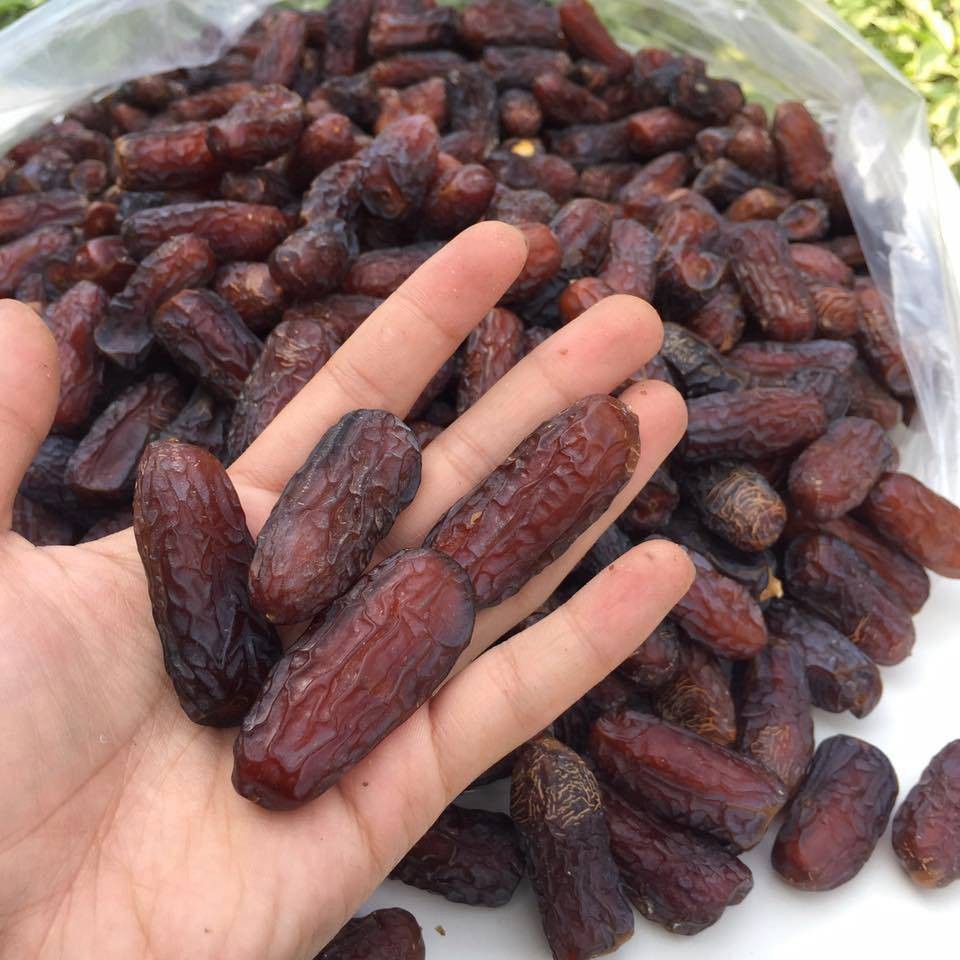
Health Benefits of Dates During Ramadan Fasting
This article is general information, not medical advice. If you have diabetes, are pregnant, or take regular medicine, talk to your doctor before Ramadan about whether fasting is safe for you and how to eat at iftar and suhoor.
During the holy month of Ramadan, Muslims around the world abstain from food and drink from dawn until sunset. When the fast is broken each evening, the first food is traditionally a few dates, following the practice of the Prophet Muhammad (peace be upon him). Nutrition helps explain why the habit works well: dates are soft, sweet and a quick source of carbohydrate. The health benefits of dates covered below are the ones a real source supports, and we say plainly where the evidence stops. Whether it’s kurma Ajwa, kurma Mariami, or kurma Medjool, each has its own taste and texture, and all of them give quick energy plus some fiber and potassium.
Energy at iftar
Dates are rich in natural sugars like glucose, fructose, and sucrose, which provide a quick energy boost after long hours of fasting. They are a good source of fiber and potassium. Three Medjool dates (about 72 g) give roughly 5 g of fiber and 500 mg of potassium (USDA), about a seventh of the 3,510 mg of potassium a day that WHO recommends for adults.
Dates are still mostly sugar, but their measured glycemic index is low to medium. In a UAE study, five date varieties had GIs of about 44 to 55, in healthy volunteers and in people with type 2 diabetes alike (Alkaabi 2011). So a few dates at iftar raise blood sugar more gently than the same amount of pure glucose.
Breaking the fast with dates is a practice of the Prophet Muhammad (peace be upon him). Anas ibn Malik reported: “The Messenger of Allah (ﷺ) used to break his fast before praying with some fresh dates; but if there were no fresh dates, he had a few dry dates, and if there were no dry dates, he took some mouthfuls of water” (Sunan Abi Dawud 2356, graded hasan sahih by al-Albani). The hadith describes a practice. It does not make a medical claim. From a nutrition point of view, dates are simply an easy first food after a long fast.
Most dates are also soft and small, so a few of them make a light start before the main meal.
Kurma Medjool is about 75% carbohydrate, mostly sugar (USDA), so it is quick energy. A date or two takes the edge off hunger before Maghrib prayer. How alert you feel after iftar depends on the whole meal, sleep and fluids, not on dates alone.
Kurma Ajwa has a GI close to other dates (55.9), but in a Saudi study of 17 varieties it had the lowest glycemic load per serving, 8.5 (AlGeffari 2016). In plain terms, a typical serving of Ajwa raised blood sugar less than most of the others tested. Claims that it prevents tiredness after iftar have not been studied.
Digestion
A common problem during Ramadan is constipation, because meal times and fluid intake change. The NHS lists eating more fibre and drinking plenty of fluids as first steps. In a UK trial, seven dates a day for three weeks increased bowel movements and stool frequency in healthy adults (Eid 2015). Kurma Mariami is a chewy date with fiber like other dates. No study has singled it out as better for digestion.
Potassium and the heart
For the heart, the health benefits of dates come down mainly to potassium. Kurma Medjool has about 696 mg per 100 g (USDA). WHO says low potassium combined with high sodium raises the risk of high blood pressure, and names dates among potassium-rich fruits. That is a reason to include them in a balanced diet. It is not proof that dates lower blood pressure on their own: in a 12-week trial in people with type 2 diabetes, 60 g of dates a day did not change blood pressure (Butler 2022).
Kurma Ajwa contains phenolic acids and flavonoids. A concentrated Ajwa extract reduced heart damage in rats given a toxic cancer drug (Mahmoud 2026). That was an animal study, and no trial in people has shown that eating Ajwa protects the heart.
Blood sugar
A low-to-medium GI only helps if the portion stays small. Three dates is a modest amount of sugar. A bowl of them at iftar, followed by sweet drinks, is a lot.
For people with type 2 diabetes, two trials found that about three dates a day (Alalwan 2020) or 60 g a day (Butler 2022) did not worsen HbA1c, and did not improve it either. We found no study showing that kurma Ajwa or kurma Mariami is better than other dates for blood sugar. If you have diabetes, ask your doctor before Ramadan whether fasting is safe for you and whether your medicine needs adjusting.
What dates don’t do
The brain runs mainly on glucose, and dates supply it. Kurma Medjool also contains some vitamin B6 (about 0.25 mg per 100 g) and magnesium (54 mg) (USDA). Whether eating dates improves concentration has not been tested in people.
Extracts of kurma Ajwa have shown protective and antidepressant-like effects in a mouse study (Asdaq 2025). Nothing like that has been shown in people, so it is not a reason to expect sharper focus at Tarawih.
Fasting can leave gaps in your diet if suhoor and iftar are rushed. Dates do not fill the vitamin gap, though. USDA lists 0 mg of vitamin C in Medjool dates and very little vitamin A (USDA). They have some iron (about 0.9 to 1 mg per 100 g) and a little zinc. Add fresh fruit and vegetables for vitamin C.
Kurma Mariami has potassium like other dates, but it will not rehydrate you. Water does that.
During fasting, the body loses fluid through sweat and breathing. Dates add potassium, but rehydration comes from drinking water and other fluids between iftar and suhoor. Breaking the fast with a few dates and some water follows the Sunnah described above.
Kurma Medjool is soft, but it is still only about 21% water (USDA), so it is not a real source of fluid. Have it with water or milk.
Dates contain small amounts of calcium (39 to 64 mg per 100 g) and magnesium (43 to 54 mg) (USDA). That is too little to do much for bones by itself, and no study links kurma Mariami to bone density. kurma Medjool is often said to ease muscle cramps during fasting because of its magnesium, but we found no study that tested it.
Dates are calorie-dense, about 277 kcal per 100 g for Medjool (USDA), so they add up. Their fiber may help you feel full, and starting iftar with a few dates and water before a big plate is a common way to slow down. Kurma Ajwa is not a low-calorie choice. All dried dates are mostly sugar.
Claims that dates improve skin elasticity or give a natural glow have not been tested in people. Dry skin during Ramadan is mostly about fluid, so drinking enough between iftar and suhoor matters more.
Dates and the Sunnah
Beyond physical health, dates carry deep spiritual significance. Breaking the fast with dates is a Sunnah (Sunan Abi Dawud 2356), and many Muslims eat kurma Ajwa in the morning because of the hadith in Sahih al-Bukhari 5445. For many families the first date at iftar is also a moment of gratitude.
Kurma Ajwa has a special place in Islamic tradition. The Prophet (ﷺ) said: “He who eats seven ‘Ajwa dates every morning, will not be affected by poison or magic on the day he eats them” (Sahih al-Bukhari 5445). That is a religious teaching, not a medical claim, and the lab studies on Ajwa extracts do not test it.
The sweetness of dates also serves as a reminder of the blessings of nourishment and the importance of moderation and appreciation in daily sustenance.
Which variety to pick
The three varieties here are close in nutrition, so the choice comes down to taste, texture and price.
- Kurma Ajwa: Dark, soft and only mildly sweet. It usually costs the most of the three.
- Kurma Mariami: Chewy and less sticky than Medjool. Easy to eat a couple with suhoor.
- Kurma Medjool: Perfect as a dessert or natural sweetener for smoothies and milkshakes.
Buying two or three kinds for the month is mostly about variety on the table. None of them keeps you going through the fast better than the others.
Tips for Ramadan
- Eat 2–3 dates with water to break your fast before proceeding with your meal.
- Include chopped dates in smoothies, porridge, or yogurt at suhoor.
- Use kurma Medjool as a natural sweetener in desserts instead of refined sugar.
- Before Tarawih, a couple of dates is an easy snack if iftar was light.
- Store dates in airtight containers in a cool place to maintain freshness and flavor.
- Purchase from reliable suppliers to ensure quality and authenticity, especially when selecting imported varieties.
In short
The health benefits of dates during Ramadan are real but modest. They are quick energy at iftar, their fiber helps digestion, and they add potassium. Claims about immunity, the brain, skin or hair have no human evidence behind them. Varieties such as kurma Ajwa, kurma Mariami, and kurma Medjool differ mostly in taste and texture, so pick the one you enjoy.
Start iftar with a few dates and water, as the Sunnah describes, then eat a balanced meal. That is the practical advice, and the evidence supports it as far as it goes.
References
- Sunan Abi Dawud 2356 (in-book: Book 14, Hadith 44), sunnah.com/abudawud:2356
- Sahih al-Bukhari 5445 (in-book: Book 70, Hadith 74), sunnah.com/bukhari:5445
- Alkaabi JM et al. Glycemic indices of five varieties of dates in healthy and diabetic subjects. Nutr J. 2011;10:59. PMID 21619670
- AlGeffari MA et al. Glycemic indices, glycemic load and glycemic response for seventeen varieties of dates grown in Saudi Arabia. Ann Saudi Med. 2016;36(6):397-403. PMID 27920411
- Alalwan TA et al. Effects of daily low-dose date consumption on glycemic control, lipid profile, and quality of life in adults with pre- and type 2 diabetes. Nutrients. 2020;12(1):217. PMID 31952131
- Butler AE et al. Effect of date fruit consumption on the glycemic control of patients with type 2 diabetes. Nutrients. 2022;14(17):3491. PMID 36079749
- Eid N et al. Impact of palm date consumption on microbiota growth and large intestinal health. Br J Nutr. 2015;114(8):1226-36. PMID 26428278
- Mahmoud HS et al. Ajwa dates extract mitigates methotrexate-induced cardiotoxicity in rats. Tissue Cell. 2026;102:103610. PMID 42155538
- Asdaq SMB et al. Potential neuroprotective and antidepressant effects of Ajwa date extract in an animal model of chronic mild stress. Sci Rep. 2025;15:39641. PMID 41224947
- USDA FoodData Central: Dates, medjool (FDC 168191); Dates, deglet noor (FDC 171726)
- WHO: WHO issues new guidance on dietary salt and potassium (2013)
- NHS: Constipation