
Kurma Delivered: Fresh Dates, Easy Options
Having kurma delivered sounds simple. You pick a pack, pay, and wait for the courier. The choices that decide whether the dates arrive in good shape come a little earlier: which date you order, how big the pack is, and what the seller’s delivery terms actually say. This guide goes through those choices with real figures, including the harga kurma per kilo on one Malaysian wholesaler’s list and the delivery and returns policy that the same wholesaler publishes, both checked in November 2026.
Your dates have already travelled a long way
Malaysia has no commercial date-growing trade, so every date sold here is imported. Any pack you order online has crossed at least one sea or border before a local courier picks it up.
FAO’s handbook Date Palm Cultivation (chapter IX, on harvesting, packinghouse management and marketing) lists four ways dates move in export trade: overland, by sea, overland and sea combined, and by air. It calls shipment by sea in containers “an efficient and (relatively) cheap means of transport”, with the fruit protected from the environment from the moment it leaves the producer until it reaches the customer’s door. Air is “the most expensive”, and the handbook says it is sometimes unavoidable when fruit must be supplied at short intervals.
Timing comes into it too. The same chapter says the right moment for a shipment sometimes forces the use of dearer transport, for example at the beginning of the season “in order to get in before other suppliers”. None of this appears as a separate line on your receipt. It is already inside the pack price. If you want to see how the bigger trade quotes are put together, the post on harga kurma 1 kontena explains the trade terms that appear on container quotes.
What one seller’s delivery policy actually says
Delivery options differ from seller to seller. The simplest way to know what you are agreeing to is to read the shipping and returns policy line by line before paying. Here is what one Malaysian wholesaler’s published policy said in November 2026.
| Point | What the policy states |
|---|---|
| Courier | Delivery across Malaysia through partner couriers, including NinjaVan |
| Delivery charge | Calculated automatically at checkout from the order’s weight and destination |
| Processing | Orders are usually processed within 1–2 working days |
| Tracking | A tracking number is shared once the order has been sent |
| Estimated delivery | 1–3 working days for Peninsular Malaysia, 3–7 working days for Sabah and Sarawak |
| Returns accepted for | Goods that are damaged, defective, sent in error, or expired on arrival |
| Deadline to report | Within 48 hours of receiving the order, with the order number and photos of the product and packaging |
| Cancelling | Possible before the order is sent; once it is with the courier it can no longer be cancelled |
Two points are worth noticing. The policy text does not mention an express, same-day or overnight option, so if you need dates by a fixed day, ask before you order rather than assuming a faster tier exists. And the delivery charge follows weight and destination, which matters when you compare a 1kg pack with a 5kg one. Add the delivery charge to the pack price before you work out what each kilo really costs you, because the harga kurma on a product page is only part of the bill.
A buyer in Kota Kinabalu or Kuching should also plan around the longer estimate. On that policy, 3–7 working days for Sabah and Sarawak comes on top of the 1–2 working days of processing.
Fresh dates and dried dates are not the same parcel
FAO’s handbook is plain about the fruit itself. Dates at every stage except tamar, the fully ripe and drier stage, are perishable “due to their high water content”. At the rutab stage, the soft-ripe stage, it says the fruit quickly turns sour unless it is cold stored. Chapter IX adds that rutab is delicate, “which makes handling and transport difficult and expensive”.
For shipments of fresh dates at the khalal or rutab stage, the handbook says a temperature recorder must be placed in the container or truck, and the customer will only sign the receipt for the shipment if the recorded temperature matches what was set for the carrier.
Mazafati, also traded as Rotab Mazafati Bam, comes from Bam in Kerman province, Iran. It is dark, very soft and high in moisture. It needs refrigeration. It is cold-stored and sold year-round, so an empty listing on one day says nothing about a season.
That matters on the list checked in November 2026, where the fresh-dates section held five packs and four of them were out of stock: Rotab Mazafati AAA 12 × 600g (RM86), Rotab BAM AAA 12 × 600g (RM88), Rotab 12 × 600g (RM90) and Kurma Muda Palestine 5kg (RM125). The one in stock was Rotab Sukkary Premium 3kg at RM63. Sukari comes from Al-Qassim in Saudi Arabia. It is golden-amber, very sweet, and sold either soft as rutab or drier.
The delivery policy quoted above says nothing about chilled packing. So before you order a soft rotab pack, ask the seller two things: how it is packed for the trip, and how many days it is expected to spend with the courier to your postcode.

Harga kurma per kilo, before you add delivery
A pack price on its own does not tell you much. To compare harga kurma fairly, turn it into ringgit per kilo first, then add delivery. The table below is a selection of packs that were in stock on the same wholesaler’s list in November 2026. It is not the whole list.
| Pack | Variety origin | Pack price | Per kilo |
|---|---|---|---|
| Mariami A Normal 2026, 5kg | Iran | RM75 | RM15.00 |
| Deglet Noor Bertangkai 12 × 400g (semi-dry) | Tunisia / Algeria | RM88 | RM18.33 |
| Rotab Sukkary Premium, 3kg | Al-Qassim, Saudi Arabia | RM63 | RM21.00 |
| Ajwa Premium A No.1 (Small) 2026, 5kg | Madinah, Saudi Arabia | RM115 | RM23.00 |
| 1kg Ajwa A 2026 | Madinah, Saudi Arabia | RM31 | RM31.00 |
| 1kg Safawi A | Madinah region, Saudi Arabia | RM35 | RM35.00 |
| 1kg Mariami AAA | Iran | RM40 | RM40.00 |
| Medjool Palestin Premium Jumbo 2026, 5kg | Morocco (variety); pack names say Palestin | RM280 | RM56.00 |
| 900g Medjool Palestin Jumbo box | Morocco (variety); pack names say Palestin | RM70 | RM77.78 |
Two pairs in that table show how much pack size can move the kilo price. Medjool goes from RM77.78 a kilo in the 900g box to RM56 in the 5kg Premium Jumbo pack. Ajwa goes from RM31 a kilo in the 1kg A pack to RM23 in the 5kg pack, though that 5kg pack is labelled A No.1 (Small), so read the grade name before treating the two as the same fruit.
Now bring delivery back in. Because the charge is worked out from weight and destination, the honest comparison is (pack price + delivery charge) divided by the kilos you receive. Do that sum for each option at checkout, with your own postcode, before you decide. That total is the harga kurma per kilo you actually pay.
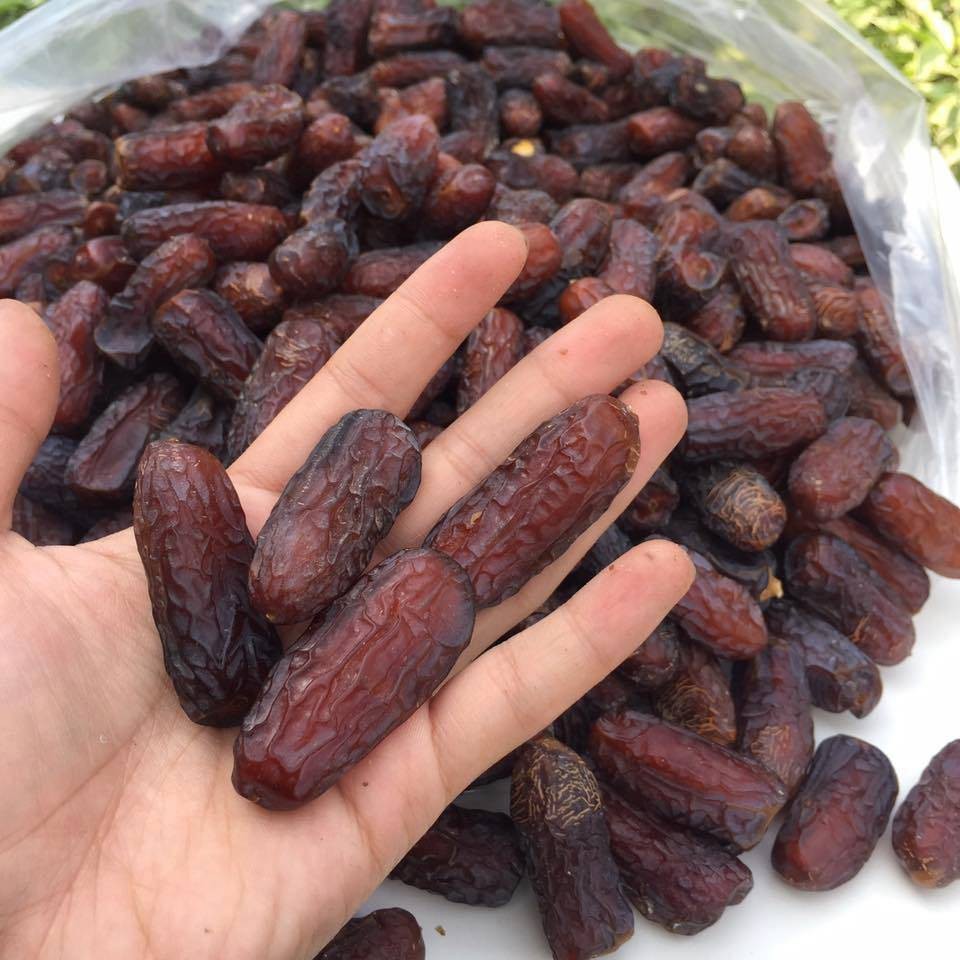
When the box arrives
Open it the same day. Take photos of the outer box and the inner packing before you unpack, then of the dates themselves. Under the policy above, a damaged, defective, wrong or expired order has to be reported within 48 hours of receipt, with the order number and photos of the product and its packaging. The product has to be in its original, unopened condition, except where the claim is about damage or a defect.
The same policy does not accept change-of-mind returns, giving hygiene and food safety as the reason. Once a claim is approved, it offers a replacement or a refund, and refunds go back through the original payment method within 7–14 working days. The original delivery charge is not refunded unless the mistake was the seller’s.
If your order included Mazafati, it goes into the fridge. For other varieties, check the pack or ask the seller how to store them.
Questions buyers ask about delivered dates
Can I get dates delivered overnight?
The policy checked for this guide gives an estimate of 1–3 working days for Peninsular Malaysia, after 1–2 working days of processing, and does not mention an overnight option. Ask the seller you are buying from directly.
Does delivery cost the same for every pack?
Not under that policy. The charge is calculated at checkout from the weight of the order and where it is going.
Which dates need extra care in a parcel?
FAO’s handbook says every stage except tamar is perishable because of its water content, and that rutab sours quickly unless cold stored. Mazafati needs refrigeration.
Can I cancel after paying?
On that policy, yes, up to the point the order is sent. Once the courier has it, the order can’t be cancelled and the returns rules apply.
Before you check out
Pick the variety, then the pack size, then look at the delivery charge for your postcode, in that order. If you are buying for a shop or a big event rather than the family table, the pairs of small and large packs in this look at bulk dates and per-kilo pricing are worth a read first. For the varieties on that list and where each one comes from, see the guide to the finest dates on a Malaysian wholesale list.